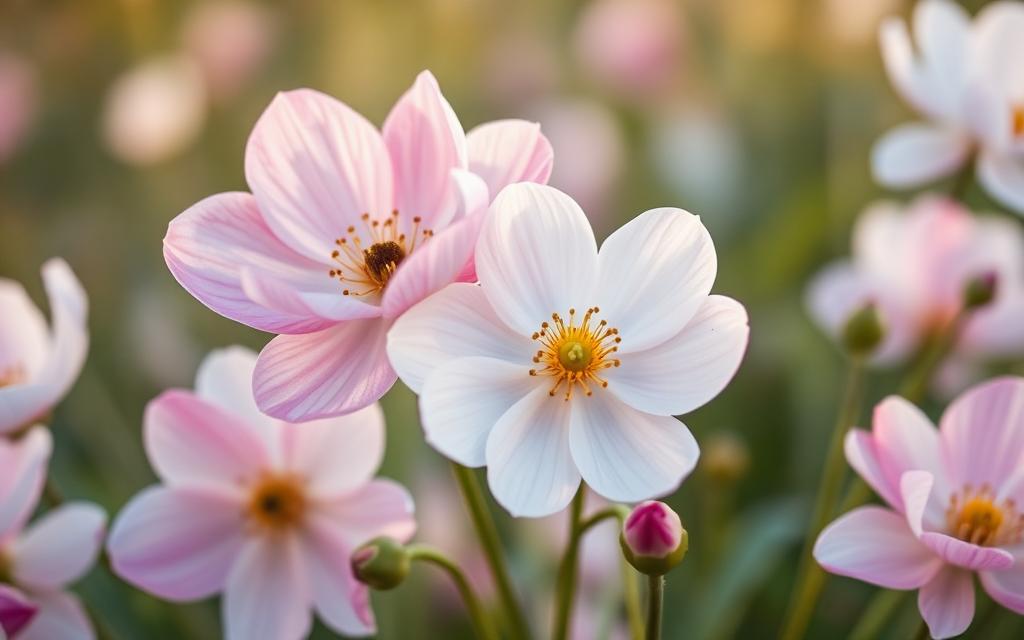
Anemone is a delicate flower known by the name “Windflower” as well. Derived from the Greek word anemos meaning wind, Windflower is a symbolic name for the way that the wind blows its petals open as well as blowing the dead petals away. Defined by the wind, these delicate flowers can grow well almost anywhere in the world; be it Britain, Japan or Egypt. Wherever they are planted, they prefer loamy and slightly acidic soil. Moreover, they are also cultivated commercially throughout the world.
Depending on the type of anemone out of more than 150 kinds that are known, these flowers can bloom during spring, summer and autumn. Belonging to the buttercup family, they come in shades of white, pink, blue, violet and red while the most common colour happens to be white.
If a Windflower blooms well, the result is the shape of a cup. When it is totally opened by the wind, it resembles the shape of a star. Affected by the wind so easily, Windflowers are also very sensitive to the human touch. Due to their delicate petals, they have the risk of getting easily torn and damaged. Hence, they require extra gentleness.
Anemones are wonderful for adding colour and interest to borders, woodland gardens, and containers. Spring-flowering varieties, such as Anemone blanda, produce carpets of blue, pink, or white flowers. Autumn-flowering Japanese anemones are taller plants that bring welcome colour to the garden late in the season.
To grow anemones, soak the corms or tubers in water for a few hours before planting. Plant them about 5cm deep and 10cm apart in well-drained soil. Most varieties prefer partial shade, though some will tolerate full sun.
With their delicate beauty and rich history in mythology and symbolism, anemones are a truly enchanting addition to any garden.