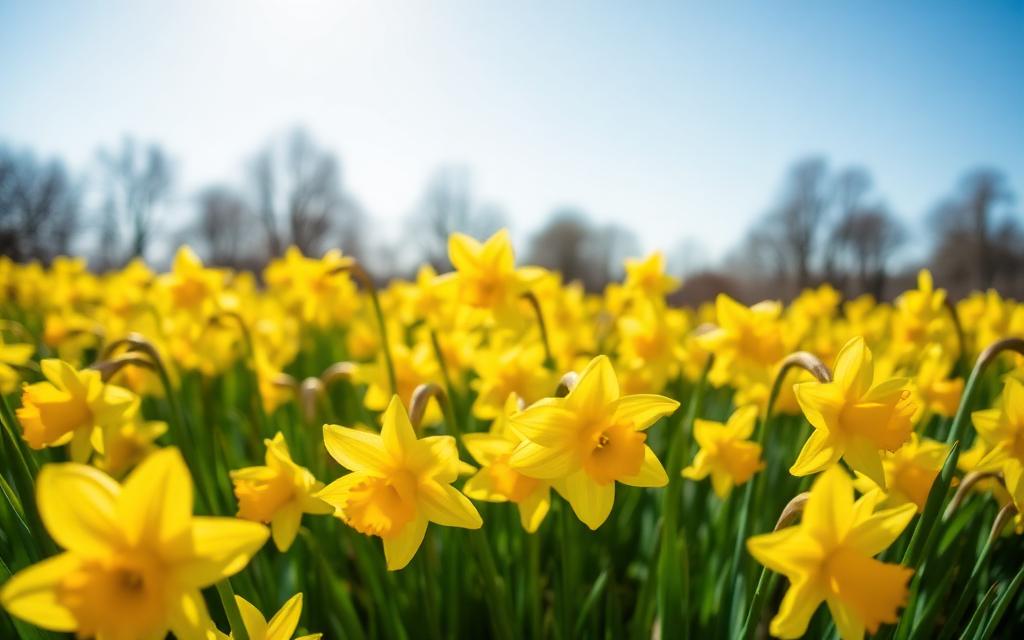
Daffodils are one of the most iconic flowers that we grow in British gardens, showing us that the spring months have arrived as their shoots begin to appear. We always think of daffodil flower bulbs as producing bright yellow flowers, however this isn’t necessarily the case at all.
Daffodils are some of the most versatile flowers around, giving many different flower colours and varieties, as well as different shaped flowers. There is the small cupped daffodil, which has a white surround and only a yellow centre. There are double daffodils, which have much more ornate flowers that don’t resemble the usual perception of a daffodil. You can also get dwarf varieties that are perfect for containers and rock gardens.
When planting daffodil bulbs, choose a spot with well-drained soil and partial to full sunlight. Plant the bulbs in autumn, about two to three times the depth of the bulb itself. Space them about 3-6 inches apart, depending on the variety.
Daffodils are relatively low-maintenance flowers. Once planted, they will naturalise and come back year after year, often multiplying to create stunning drifts of colour. After flowering, allow the foliage to die back naturally – this helps the bulb store energy for next year’s display.
One of the best things about daffodils is that they are deer and squirrel resistant, unlike many other spring bulbs. This makes them an excellent choice for gardens where wildlife is a concern.
Popular varieties to try include ‘King Alfred’ for classic yellow blooms, ‘Ice Follies’ for white and cream tones, and ‘Tête-à-Tête’ for a charming miniature variety perfect for containers.