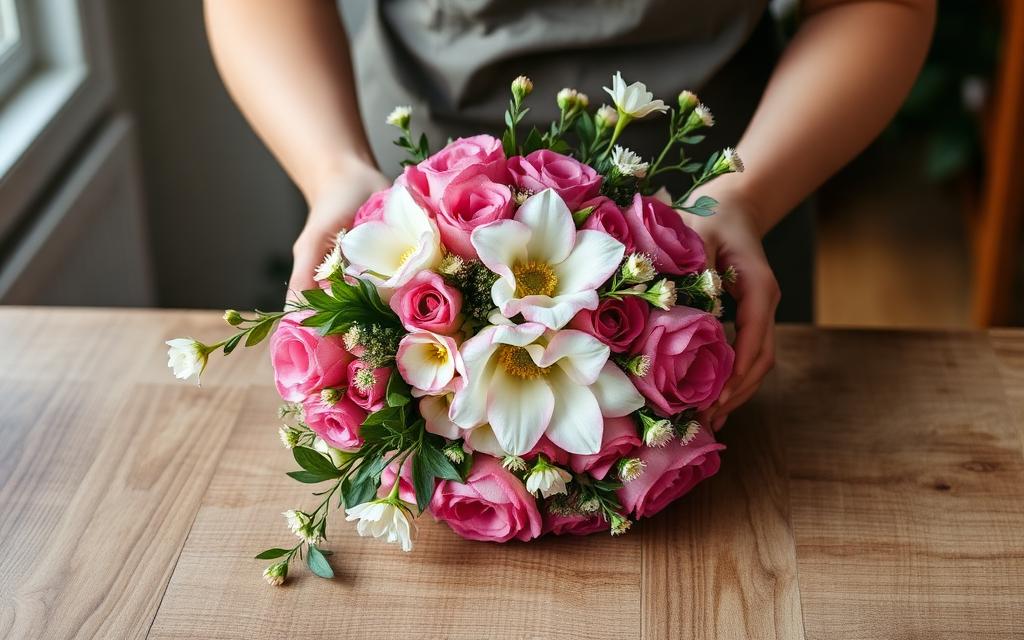
Flower arrangement can have as much of an impact on your garden’s design as the diversity of plant-life itself. Some people opt for a more haphazard approach towards their flower arrangements, and while this can work in your favour when you’re shooting for specific garden styles, for others carrying out colour coordination and so on is necessary.
Learning flower arrangement can teach you a lot about how people perceive the colour schemes of flower arrangements, as well as the size and shape of the flowers too. Of course, flower arranging isn’t limited to landscape design, it is also heavily incorporated into floral displays more generally, such as is done in bouquets.
Flower arrangement can be as readily self-taught as any other art-form, but the main difficulty in doing so is the lack of resources. Unlike with painting, decorating with flowers requires a constant influx of new and expensive flowers. In classes, they will typically teach you with fake flowers that will last a long time.
The basic principles of flower arrangement include balance, proportion, scale, and harmony. Understanding colour theory is also crucial – complementary colours create vibrant, eye-catching displays, while analogous colours produce a more harmonious, soothing effect.
When creating an arrangement, start with your focal flowers – these are the largest, most eye-catching blooms. Then add secondary flowers to complement them, and finish with filler flowers and greenery to add texture and depth.
Consider the container as part of your design. The vase or container you choose should complement the flowers and suit the setting where the arrangement will be displayed. A rustic container suits country-style arrangements, while a sleek modern vase works well with minimalist designs.